Unlocking the hidden value above our heads
As city centres become denser and development opportunities become harder to find, we're seeing more developers using vertical extensions to maximise building value.
Vertical extensions are no longer just a way of adding extra floors. They’re creating new office accommodation, rooftop terraces, hospitality spaces, and the plant infrastructure needed to support modern buildings, all without increasing a building’s footprint.
Why choose a vertical extension?
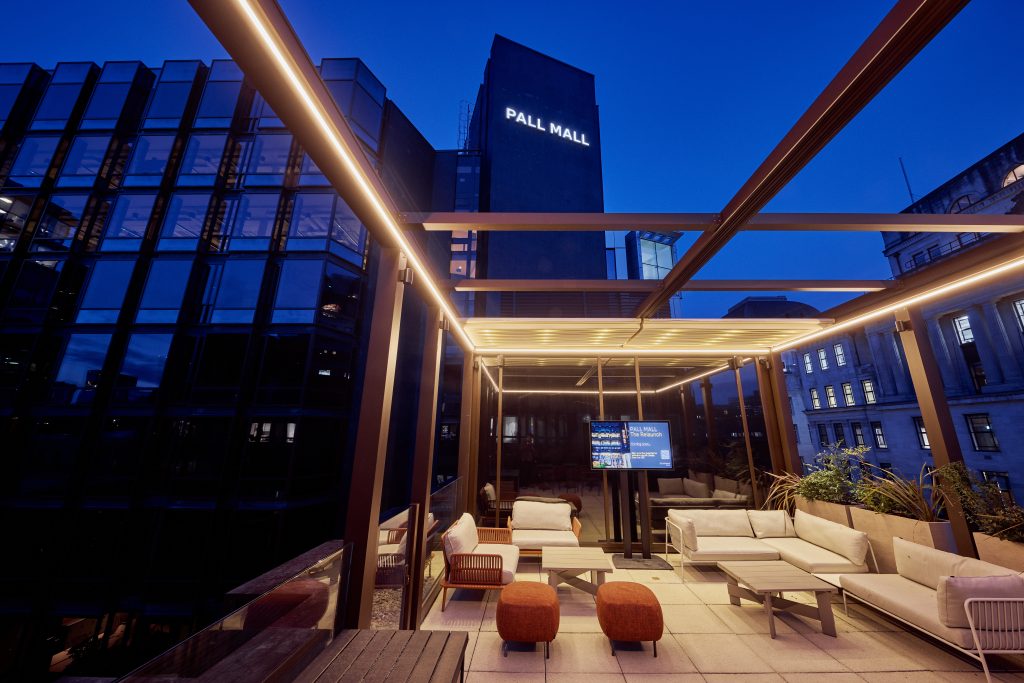
With taller buildings reducing sunlight at street level, rooftop terraces offer something increasingly valuable: guaranteed access to daylight and views across the city. For occupiers, that’s a genuine attraction. For building owners, it’s an opportunity to make better use of space that may previously have been underutilised.
At Dragonfly, we’ve delivered a number of vertical extension projects across Manchester, and while every project is different, the objective is usually the same: maximise the potential of the space already available.
At Pall Mall on King Street, we completed two vertical extensions as part of a wider refurbishment project. The works delivered additional office accommodation, new plant space and a rooftop terrace, all carefully integrated within the existing Grade II listed building.
We’ve also delivered a project at Blackfriars House that transformed unused roof space into a new restaurant, terrace and additional plant area, helping create an entirely new hospitality offering above an existing commercial building.
Of course, the challenge isn’t simply building upwards.
Vertical extensions often take place in live environments where tenants remain in occupation and neighbouring businesses continue to operate as normal. Success depends on balancing the needs of occupiers, local stakeholders and the local authority while safely delivering complex structural works.
That’s often what makes vertical extensions so rewarding. They combine structural complexity, careful stakeholder management, and intricate construction sequencing, all within some of the busiest parts of the city.
As Manchester continues to evolve, we expect more developers to look upwards rather than outwards. The opportunity to create additional space, improve building performance and introduce new amenities without acquiring more land is becoming increasingly attractive.
From listed buildings to occupied commercial properties, we’ve seen first-hand how a well-executed vertical extension can unlock potential that was there all along.